

Materials & long-duration energy / A domain concept
Technical field guide · 01—06Material.
Method.
System.
Better energy questions begin with the connections between them.
Explore the field guideAn evidence-led concept for
industrial materials and energy.
Not an operating alliance.

A photograph shows a process.
A specification explains what it can do.
The system map
Six connected
lines of inquiry.
Follow a material from identification to end of use. Each pathway separates what a picture shows from what a credible claim requires.
How to read this guideMaterials & provenance
Separate mineral identity, supply-chain evidence and the requirements of the end use.
Testing & qualification
Make sample identity, method, conditions and uncertainty explicit before comparing results.
Industrial process
Separate a process diagram, a qualified operation and a photograph of equipment.
Grid connection
Distinguish electrical interconnection, site conditions and storage-system performance.
Renewable integration
Use measured profiles and a defined service before making a storage comparison.
Recovery & logistics
Ask what is recovered, by whom and with what evidence. Do not equate scrap collection with a verified recovery loop.
From material to energy service
Start with the need.
Then compare the system.
How much power? For how long? Under which conditions? A storage conversation becomes useful when those questions are explicit.
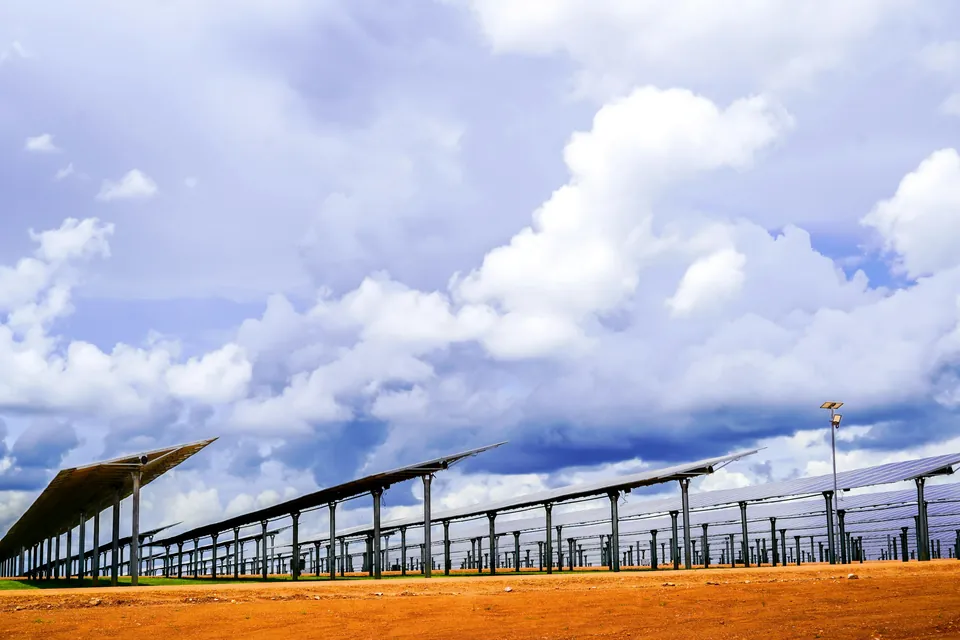
Explore renewable integrationIllustrative solar installation, not a VanadiumAlliance project. No battery or vanadium use is established.
Power and energy.
Related, not identical.
All-vanadium redox flow batteries circulate two liquid electrolytes through an electrochemical cell stack. Vanadium changes oxidation state as the battery charges and discharges.
Source: University of Washington · Clean Energy Institute (opens a new tab)Amount of stored electrochemical energy
Rate of conversion at the cell stack
Controls, conversion and grid requirements
Conceptual relationship only, not a piping diagram. Both electrolytes circulate through the stack. The stack largely determines power; electrolyte inventory and tank capacity largely determine stored energy. Delivered output still depends on operating conditions, losses and the complete system.
Source: Pacific Northwest National Laboratory (opens a new tab)Put the questions to work
Build a clearer
requirements brief.
Compare two power-and-duration scenarios. Identify the records you still need. Export a local worksheet.
Open the scoping toolRequested energy in kWh
- No supplier ranking
- No project economics
- No information sent
Behind the name
Vanadium.
A meeting of possibilities.
Vanadium is element 23, a transition metal. The name refers to Vanadis, associated with the Norse goddess Freyja. Its established applications include steel alloys, while all-vanadium flow batteries use its changing oxidation states.
Source: Royal Society of Chemistry (opens a new tab)Alliance is a creative brand direction here: a possible place to connect materials, research and energy-system questions. It does not mean a real membership body exists.
About the domain conceptIllustrative photography for a prototype publication about industrial materials and long-duration energy. No pictured person, facility, project or organization is represented as a VanadiumAlliance member, partner, customer or endorser. No verified vanadium or flow-battery photograph is included.